
The Melon Method: A Simple Decluttering Trick
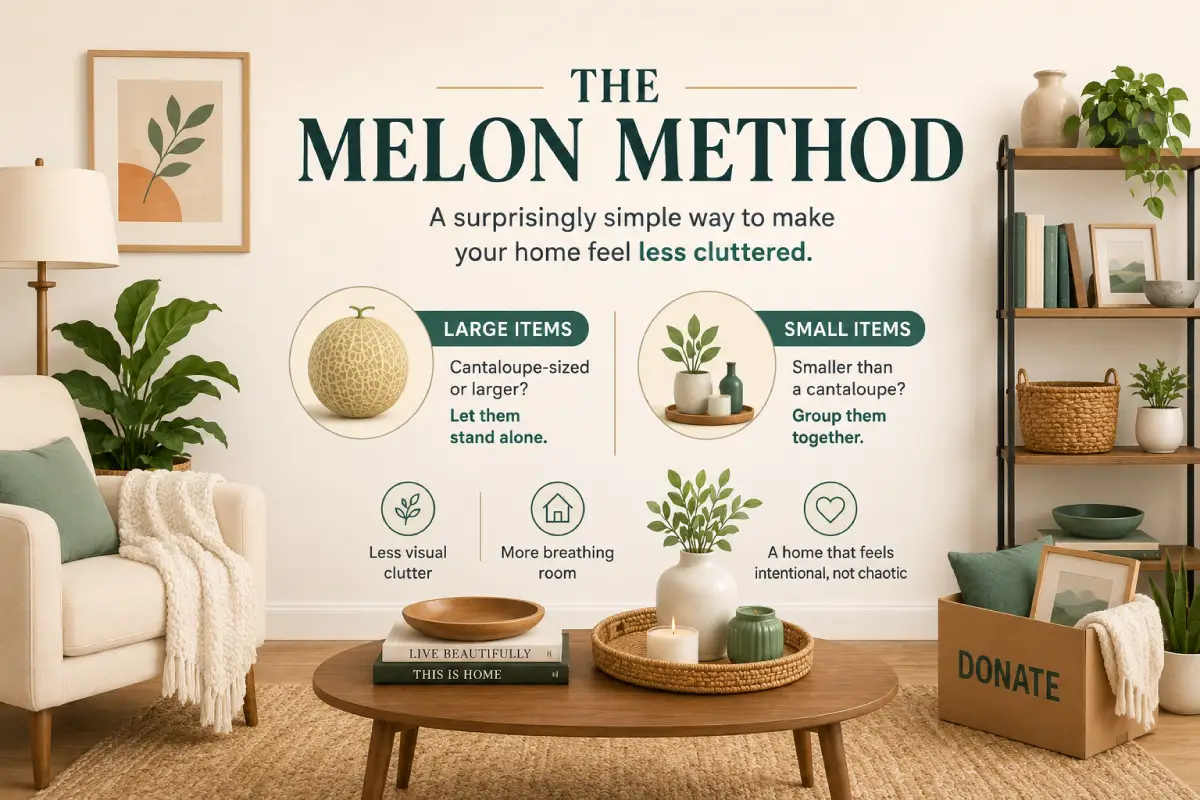
What if your home could look dramatically less cluttered without getting rid of everything you love? That’s the idea behind the Melon Method, a new way to visual decluttering that uses one surprisingly simple measurement: the size of a cantaloupe.
What Is the Melon Method?
The Melon Method is a visual approach to decluttering that focuses less on how many belongings you own and more on how those belongings are displayed. The concept was introduced by vintage and eclectic styling creator Natasha Dabell-Jones and offers a refreshingly simple way to rethink crowded surfaces.
It starts with visual clutter
- Look at your surfaces: Coffee tables, countertops, dressers, nightstands, shelves, and consoles are common places for small objects to accumulate.
- Notice what competes for attention: Candles, bowls, frames, figurines, books, containers, and everyday odds and ends can each look harmless on their own but busy when scattered together.
- Think in visual groups: Instead of treating every small item as its own display, combine related pieces so your eye sees fewer individual elements.
- You don’t have to become a minimalist: The goal isn’t an empty house. It’s a home where the things you enjoy feel intentional instead of lost in visual noise.
Why this approach feels different
- You can keep meaningful things: Sentimental objects and collections don’t automatically have to go.
- It works with many decorating styles: You can love colorful, vintage, eclectic, traditional, or maximalist interiors and still create visual breathing room.
- There’s an easy rule to remember: Instead of wondering whether every object makes a room look cluttered, you have a simple size reference to start with.
The Cantaloupe-Size Rule
Here’s where the name comes from. Picture an average cantaloupe. That approximate size becomes your reference point when deciding how an object should be displayed.
Cantaloupe-sized or larger
- Let larger pieces stand alone: A substantial vase, lamp, sculpture, planter, bowl, or other decorative object may have enough visual weight to work by itself.
- Give hero pieces some breathing room: Instead of surrounding every large object with smaller decorations, leave open space around pieces you want people to notice.
- Use scale to simplify: One larger decorative piece can sometimes make a surface feel calmer than six or seven small ones.
Smaller than a cantaloupe
- Group smaller pieces: Bring several little objects together rather than scattering them across an entire surface.
- Create a visual boundary: A tray, shallow bowl, basket, or stack of books can help multiple objects read as one intentional arrangement.
- Vary height and texture: A thoughtful group can still include different shapes and materials without looking chaotic.
Try a Whole-Room Melon Method Reset
When you’ve looked at the same shelves and tables every day, it can become surprisingly difficult to see the clutter. A temporary reset can make those familiar objects feel new again and help you decide what actually belongs together.
Start by clearing the visual field
- Choose one room: Don’t dismantle your entire house at once. Start with the living room, bedroom, kitchen, or another manageable space.
- Gather decorative objects: Bring together lamps, ceramics, sculptures, candles, books, small containers, and other display pieces from the room.
- Sort what you collected: Look for similarities in size, height, texture, color, material, and purpose before putting anything back.
Rebuild the room intentionally
- Place the big pieces first: Give larger objects the opportunity to work as standalone focal points.
- Build groups from smaller pieces: Combine objects that make sense together instead of spreading them across every available surface.
- Leave some space empty: Not every corner of a shelf or tabletop needs decoration.
Then evaluate what remains
- Love it but don’t need it displayed? Store it and rotate your décor later.
- Don’t love or use it anymore? That’s when the Melon Method can naturally turn into actual decluttering.
Your Melon Method toolkit
- A cantaloupe-sized visual reference
- Trays, baskets & decorative bowls
- Books for creating height
- Donation box for anything ready to go
Group It, Display It or Declutter It?
Once you’ve applied the size rule, the next decision gets easier. Every object doesn’t need its own spot. Instead, decide whether it deserves to stand alone, belongs with a group, should be stored, or is ready for a new home.
Keep & display
- Choose your larger favorites: Let substantial pieces become focal points instead of surrounding them with unnecessary extras.
- Corral small favorites: Turn collections of smaller belongings into intentional arrangements using trays, books, bowls, or baskets.
- Rotate instead of crowding: You don’t have to display everything you own at the same time.
Store, donate or remove
- Store seasonal pieces: Decorations you still enjoy can wait for their turn instead of competing for space year-round.
- Donate usable belongings: If something no longer fits your home but still has useful life left, donation can give it another opportunity.
- Address the bigger clutter: Once your surfaces look calmer, you may notice furniture or other bulky items that no longer work for the room.
| What You Notice | Try This | Goal |
|---|---|---|
| One larger statement piece | Display it alone | Create a focal point |
| Several small objects | Group them together | Reduce visual noise |
| Too much décor | Rotate some into storage | Create breathing room |
| Items you no longer enjoy | Donate usable pieces | Reduce actual clutter |
| Bulky furniture that no longer works | Donate or responsibly remove it | Reclaim usable space |
| End result | Fewer competing elements | A calmer, more intentional room |
When Visual Decluttering Turns Into the Real Thing
The Melon Method doesn’t require you to get rid of your belongings, but rearranging a room has a funny way of revealing what you’re truly ready to let go. Once you see your space with fresh eyes, you may discover things that no longer deserve valuable room in your home.
- Start with usable extras: Décor, lamps, shelving, furniture, and other household pieces may still be useful to someone else.
- Look beyond the tabletop: A cleaner surface can make an oversized chair, unused bookcase, spare desk, or other bulky item suddenly stand out.
- Create a donation zone: Keep one box or designated area for items you decide to release as you work through each room.
- Don’t refill the space immediately: Give yourself time to enjoy the room with less visual competition before deciding whether it needs anything else.
FAQ: The Melon Method & Decluttering
One-Page Melon Method Checklist (Save This!)
- ☑️ Choose one room or surface to reset
- ☑️ Gather small décor before rearranging
- ☑️ Let cantaloupe-sized pieces stand alone
- ☑️ Group smaller objects into visual units
- ☑️ Store, rotate or donate unnecessary extras
- ☑️ Give usable items a second life through donation