Move More, Own Less: How Decluttering Boosts Daily Activity (Backed by Science)
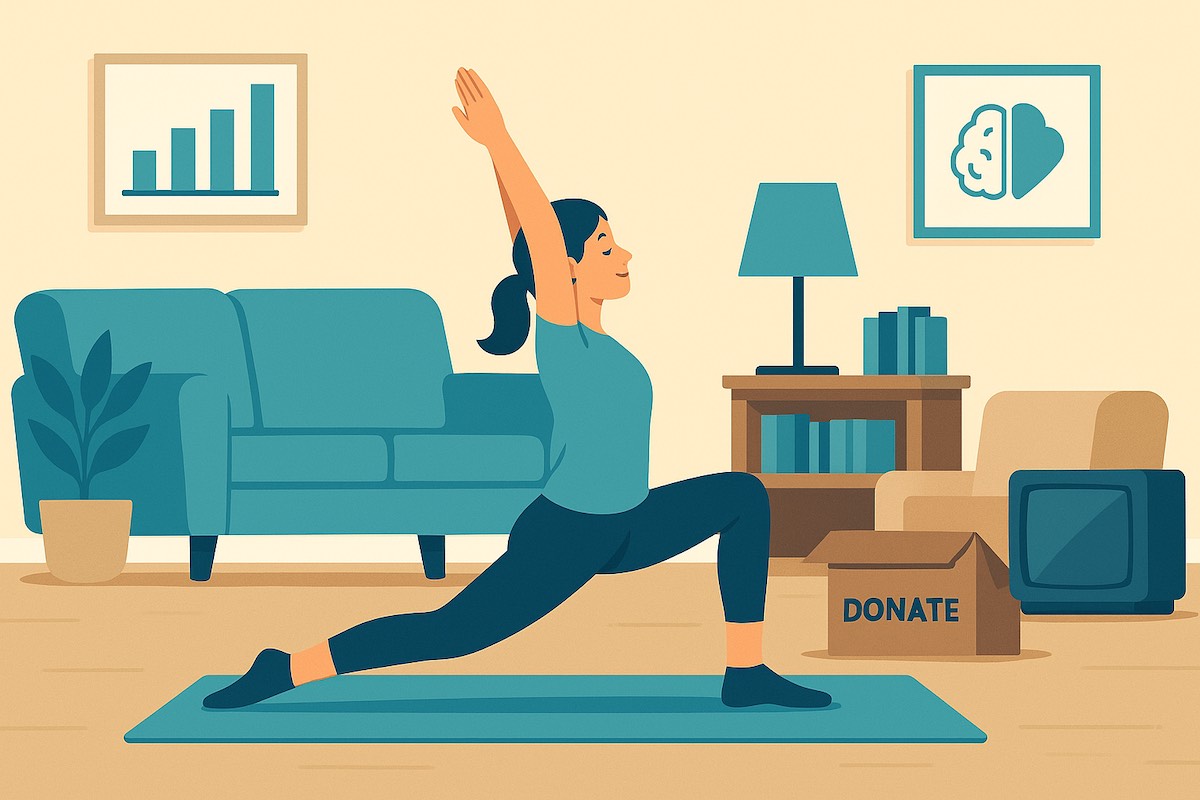
If you’ve ever tried to do yoga in a crowded living room or squeeze past a stack of boxes to get to the door, you’ve felt it: clutter makes movement harder. The good news is that clearing space doesn’t just look nicer; research suggests it can reduce stress, boost energy, and make it easier to be active every day.
Why Moving More Matters (Before We Talk Stuff)
Most adults aren’t getting enough movement. U.S. guidelines recommend at least 150 minutes of moderate-intensity activity per week (about 30 minutes a day, five days a week) plus muscle-strengthening on two days.[1] [2] That could be brisk walks, cycling, or even more active chores at home.
On paper, 30 minutes a day doesn’t sound impossible. In real life, though, people run into the same blockers over and over:
- “I don’t have space to work out at home.”
- “My equipment is buried somewhere in the garage.”
- “Just getting ready to exercise feels like a whole project.”
That’s where your physical environment (and the amount of stuff in it) starts to matter more than most of us realize.
What the Research Says About Clutter, Stress, and Energy
Researchers at UCLA’s Center on Everyday Lives of Families (CELF) spent years documenting life in 32 middle-class homes. They found that crowded, cluttered spaces were strongly linked with higher reported stress, especially for mothers.[3] In a related study, women who described their homes as cluttered showed a flatter daily cortisol pattern; a biological marker associated with chronic stress and worse health outcomes.[4]
Other work on the “built environment” backs this up: the spaces we live in influence how much we move, how much we sit, and how easy it feels to be active at all.[5] When home doesn’t feel restful or functional, it’s harder to find the motivation to roll out a mat, go for a walk, or do a quick strength session.
How Owning Too Much Quietly Shrinks Your Daily Movement
Even without a lab, you can see how excess stuff cuts into movement:
- Physical obstacles: Boxes in the hallway, extra chairs, or an old treadmill-as-coat-rack turn open walkways into obstacle courses. You literally take fewer steps when routes are blocked.
- “Setup friction” for exercise: If every workout starts with moving a coffee table, hunting for dumbbells, and clearing a 6×6 space, it’s far easier to skip it.
- Hidden gear: Bikes hung behind holiday décor or weights buried in a storage unit rarely see the light of day.
- Mental overload: Visual clutter competes for attention, making it harder to relax or focus on a simple routine.
Studies on neighborhood and household environments show a similar pattern: when spaces feel unsafe, crowded, or inconvenient, people move less and sit more.[5] Your living room, garage, and hallways are part of that environment.
Cluttered home
- More “oops, I’ll work out tomorrow.”
- More time spent looking for things.
- Less open floor space for stretching or play.
Cleared-out home
- Workout gear visible and reachable.
- Room for mats, movement, and play.
- Lower stress, easier “yes” to 10 active minutes.
Decluttering as Movement: NEAT, Explained
Here’s the fun part: you don’t need a perfect gym routine to benefit from moving more. Researchers talk about NEAT “Non-Exercise Activity Thermogenesis”, which is the energy you burn doing everything that isn’t formal exercise: walking around the house, carrying laundry, tidying up, even fidgeting.[6] [7]
Estimates suggest NEAT can account for up to 15% of your daily energy expenditure, and people who move more in small ways tend to have healthier weight and metabolic profiles over time.[8]
Decluttering that doubles as movement
- Box-by-box sorting: Carrying items to a donate pile, lifting small boxes, and walking items to different rooms is light activity that adds up.
- Rearranging furniture for flow: Sliding a coffee table, breaking down an old shelf, or moving a chair out of the room all require effort.
- Stairs and steps: Bringing items downstairs to stage for donation adds short bursts of stair climbing, exactly the kind of “incidental” activity linked to better heart health.
Room-by-Room: Make Space for Movement at Home
You don’t have to go full minimalist. Instead, think like a movement coach walking through your home. Where could you create a little more room to stretch, walk, or play?
Living room: from catch-all to mini studio
- Free the center: Remove one bulky piece (extra armchair, oversized ottoman, old media cabinet) to open a mat-sized space.
- Visible gear: Keep a small basket with resistance bands, sliders, or a yoga strap where you can see it.
- Screen swap: Once a day, switch from TV to a 10-minute mobility or stretching video in that open space.
Bedroom: calm space for stretching and sleep
- Clear one side: Make sure there’s enough room next to the bed for a few simple stretches or a short bodyweight routine.
- Under-bed edit: Donate or relocate bulky under-bed storage that makes it hard to move or clean.
- Nightstand, not night-heap: Less visual clutter can support better sleep, which in turn supports better energy for movement the next day.[5]
Entryway & hallways: your daily walking lanes
- Clear your routes: Remove shoe piles, spare chairs, and storage bins that narrow walkways.
- Active cues: Keep a leash, walking shoes, or small daypack visible to make “quick walk” the easy option.
- Step count booster: Decide that every time you take a call, you’ll walk your hallways instead of sitting.
Garage & storage: from graveyard to gear hub
- Retire the broken gear: Old treadmills, cracked ellipticals, or rusted weight benches take up space you could use for functional movement.
- Make room for what you use: Bikes, scooters, or sports gear should be easy to grab, not buried behind a dresser you meant to sell three years ago.
- Create a “launch pad”: Designate one clear area where you can stretch, do light strength work, or warm up before heading out.
Where Bulky Donations Fit In
At some point, you hit a wall with what you can simply “organize.” Big, underused items dominate your floor plan:
- That second couch no one sits on.
- The exercise bike turned clothes hanger.
- Extra dressers, TV stands, or bookshelves from old apartments.
These pieces are exactly what keep your home from feeling open and easy to move in. They’re also the hardest to get rid of on your own; too bulky for a regular trash can, and often still useful enough that landfilling them feels wrong.
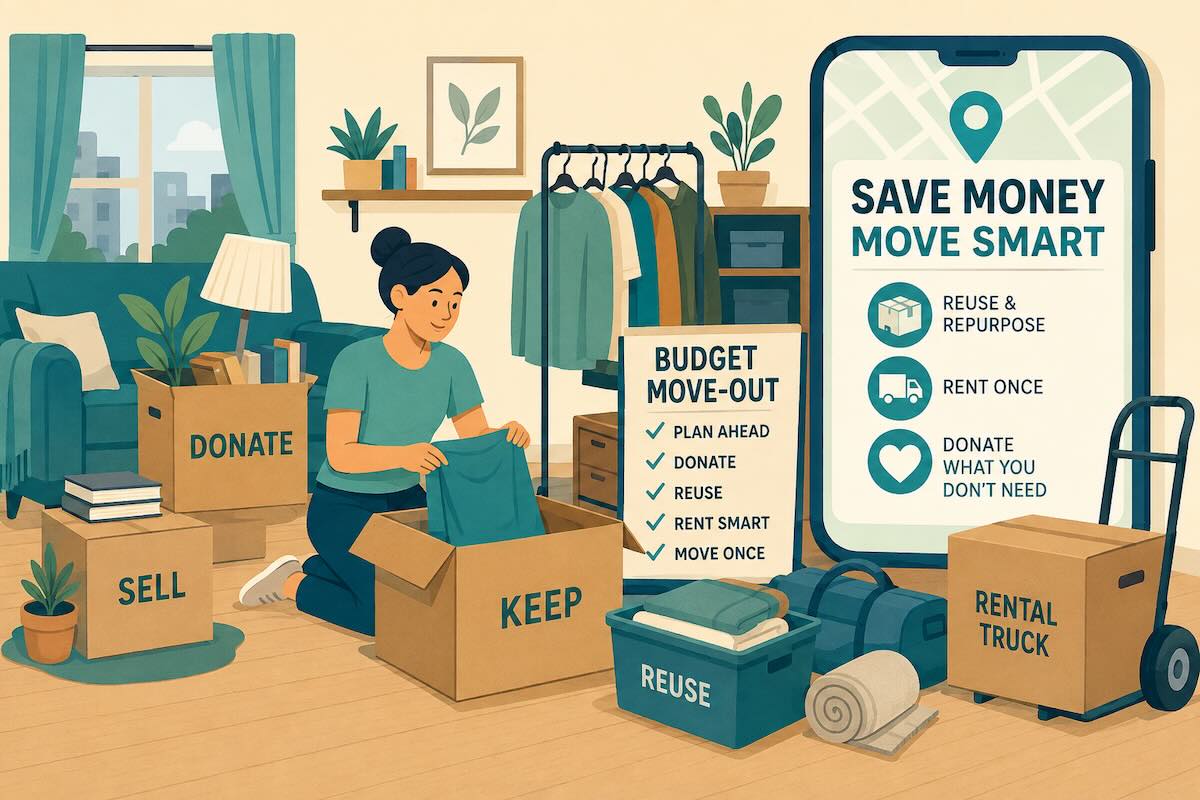
Donation-first, movement-friendly logistics
- First, decide what goes: Walk through your space and list the one or two biggest items that, if removed, would instantly make room for movement.
- Plan the replacement: If you’re upgrading equipment or furniture, schedule removal for the old piece before the new one arrives.
- Donation over dumping: When possible, route usable items to local reuse partners so they stay in circulation longer instead of heading straight to a landfill.
FAQ: Movement, Clutter, and Donations
Bottom Line
You don’t have to become a minimalist or a marathon runner. But there’s a clear pattern in the research: cluttered, stressful spaces make it harder to be active, while open, functional rooms make movement easier to start and easier to stick with.[3] [4] [5]
If you want to move more, start with what you own. Clear a mat-sized area in the room where you spend the most time. Retire one or two big, underused pieces that are blocking your flow. Route them to donation when you can, and don’t be afraid to get help hauling the heavy stuff.
Move more, own less, and let your home become a place that nudges you toward health (not away from it).
References
- Centers for Disease Control and Prevention — Adult Activity: An Overview. cdc.gov.
- U.S. Department of Health and Human Services — Physical Activity Guidelines for Americans, 2nd Edition. Guidelines PDF.
- University of California — Book documents cluttered paradise of middle class (Life at Home in the Twenty-First Century, UCLA CELF). universityofcalifornia.edu.
- Saxbe, D. & Repetti, R. — No Place Like Home: Home Tours Correlate With Daily Patterns of Mood and Cortisol, Personality and Social Psychology Bulletin (2010). PDF access via hosted article.
- Barnett, D. W. et al. — Neighbourhood Built Environment Influences on Physical Activity among Adults (systematized review). semanticscholar.org.
- Mayo Clinic Press — The NEAT way to add movement to your day. mayoclinic.org.
- Levine, J. — Nonexercise Activity Thermogenesis in Obesity Management, Mayo Clinic Proceedings. mayoclinicproceedings.org.
- Verywell Health — How Non-Exercise Activity Thermogenesis (NEAT) Supports Weight Management. verywellhealth.com.